
Liquid cooled break resistor
We have already compiled a selection of suitable products for you below. Click here to see the entire product range.
Applications
Industry
E-Mobility
Automotive
Product Groups
Power Resistors
Electronic Controllers

HPBR
liquid-cooled brake resistor
Liquid-coolant braking resistor for applications in hybrid/electric trucks and buses.
technical datatolerance max ±
10 %
tolerance min ±
5 %
Voltage max
1200 V
rated power max (kW)
250 kW
#Liquid-cooled #Brake-resistor #E-Mobility #E-Drives-recuperation #liquid-cooled brake resistor
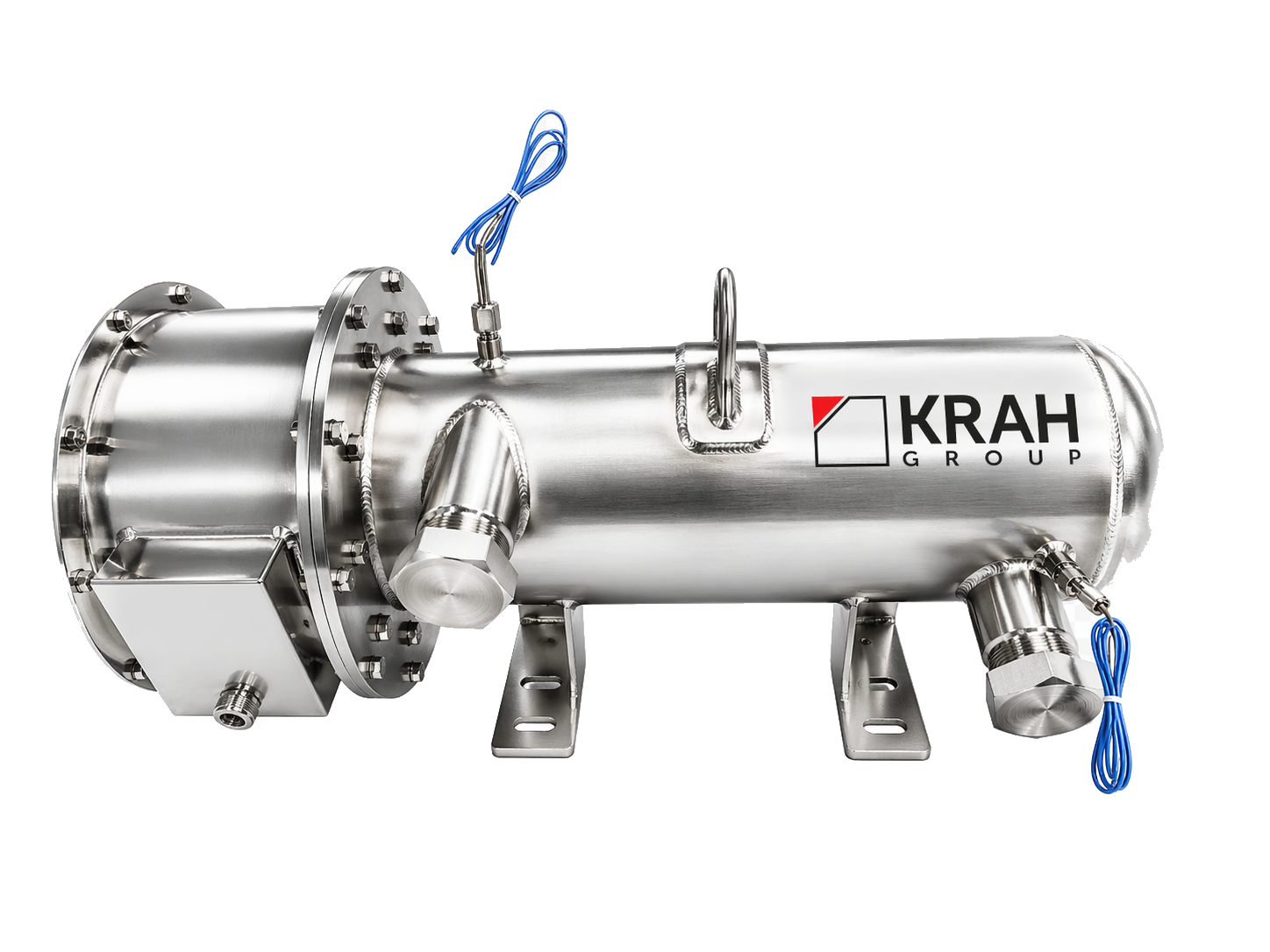
LCBR
liquid-cooled brake resistor
Liquid-coolant braking resistor for applications in hybrid/electric trucks and buses.
technical datatolerance max ±
10 %
Voltage max
1200 V
tolerance min ±
5 %
rated power max (kW)
250 kW
#Liquid-cooled #Brake-resistor #E-Mobility #E-Drives-recuperation #liquid-cooled brake resistor
No suitable product found?
FAQs
A liquid-cooled brake resistor is an electrical component that safely converts excess braking energy into heat and efficiently dissipates this heat via a cooling medium. In an international context, this solution is often referred to as a Liquid Cooled Brake Resistor or Water Cooled Brake Resistor.
Liquid-cooled brake resistors are primarily used in applications where high power, compact designs, and reliable temperature management are required—such as in electric commercial vehicles, buses, rail vehicles, marine applications, or industrial drive systems.
When braking electric drives, energy is fed back into the intermediate circuit. If this energy cannot be returned to the system or stored, it must be dissipated in a controlled manner. This is exactly where the brake resistor plays a central role: it converts the excess electrical energy into heat.
In liquid-cooled systems, this heat is carried away from the component via a cooling medium – for example, water or a water-glycol mixture. This allows for stable and reliable performance even under high loads.
In certain applications, using a brake resistor isn’t just technically sensible—it’s also necessary to meet legal and regulatory requirements. According to ECE R13 (regulations for commercial vehicle braking systems), electric trucks and buses must ensure reliable braking performance even under continuous or extended braking conditions—like long downhill drives. This requirement is defined as 'continuous braking performance' or 'endurance braking.' In electric and hybrid vehicles, the regenerative brake can’t always fully handle this task—for example, when the battery is highly charged or due to system-related limitations. In such cases, an additional system is needed to safely dissipate the braking energy.
A liquid-cooled brake resistor takes on exactly this function and ensures:
- Stable braking performance even under continuous load
- Controlled energy dissipation regardless of the battery condition
- Thermal stability during long braking cycles
That's why liquid-cooled brake resistors are often a key component, especially in heavy electric commercial vehicles like eTrucks and eBuses, to reliably meet the continuous braking performance requirements according to ECE R13.
Liquid cooling is particularly advantageous whenever:
- high braking performance must be reliably managed
- available installation space is limited
- low surface temperatures are required
- high ambient temperatures or harsh operating conditions are present
- a compact and high-performance system integration is needed
Compared to air-cooled solutions, liquid cooling enables highly efficient heat dissipation and thereby supports a high power density while maintaining a compact design.
Liquid-cooled braking resistors provide numerous benefits for modern electric drive systems:
- High power density in a compact design
- Efficient heat dissipation through the existing cooling circuit
- Reduced thermal stress on adjacent components
- Reliable operation even under demanding environmental conditions
- Good integration capability into vehicle and system platforms
- Custom design for OEM and project requirements
Especially in applications with high energy throughput and limited installation space, liquid-cooled braking resistors are often the technically and economically convincing solution.
Liquid-cooled braking resistors are suitable for numerous industries and fields of application, in particular for:
- eTrucks and eBuses
- Hybrid and electric vehicles
- Rail vehicles and traction systems
- Marine and offshore applications
- Cranes, conveyor technology, and industrial drives
- Test benches and energy dissipation systems
Wherever high braking energies need to be safely dissipated, liquid-cooled solutions provide decisive advantages in terms of performance, installation space, and temperature behavior.
Depending on the application and system design, different cooling media can be used, for example:
- Water
- Demineralized water
- Water-glycol mixtures
The selection of the appropriate cooling medium depends, among other things, on the voltage level, environmental conditions, thermal requirements, and integration into the existing cooling circuit.
In electric commercial vehicles, installation space, weight, efficiency, and thermal stability play a decisive role. At the same time, high energy recuperation occurs during braking, which must be managed safely and reliably. Liquid-cooled brake resistors can be purposefully integrated into existing vehicle cooling concepts, offering an efficient solution for modern eMobility platforms. They are especially a valuable addition to the overall system during demanding driving profiles, repeated braking cycles, and high continuous loads.
The proper design of a liquid-cooled braking resistor depends on several factors. These particularly include:
- electrical power and load profile
- resistance value
- rated and peak voltage
- braking duration and duty cycle
- cooling medium and flow conditions
- installation space and mechanical interfaces
- environmental conditions and protection requirements
- desired sensors and monitoring
A precise technical design is crucial to ensure that the braking resistor fits optimally into the overall system and operates reliably over the long term.
In many applications, brake resistors must operate reliably under demanding conditions – for example, in the presence of vibration, humidity, temperature fluctuations, or contamination. Therefore, enclosure design, the materials used, degree of protection, and optional sensors are important selection criteria.
Depending on the requirements, solutions with robust construction, high resistance, and additional temperature monitoring may be advisable. This allows operational reliability, service life, and system protection to be specifically enhanced.
Do you need assistance
with your selection?
We provide personalised advice